2026
arXiv preprint
Visualizing Distribution Coverage in Generative Diffusion Models
Pass@k reveals how distribution-matching distillation trades broad coverage of valid outputs for stronger single-sample quality in image and video generation.
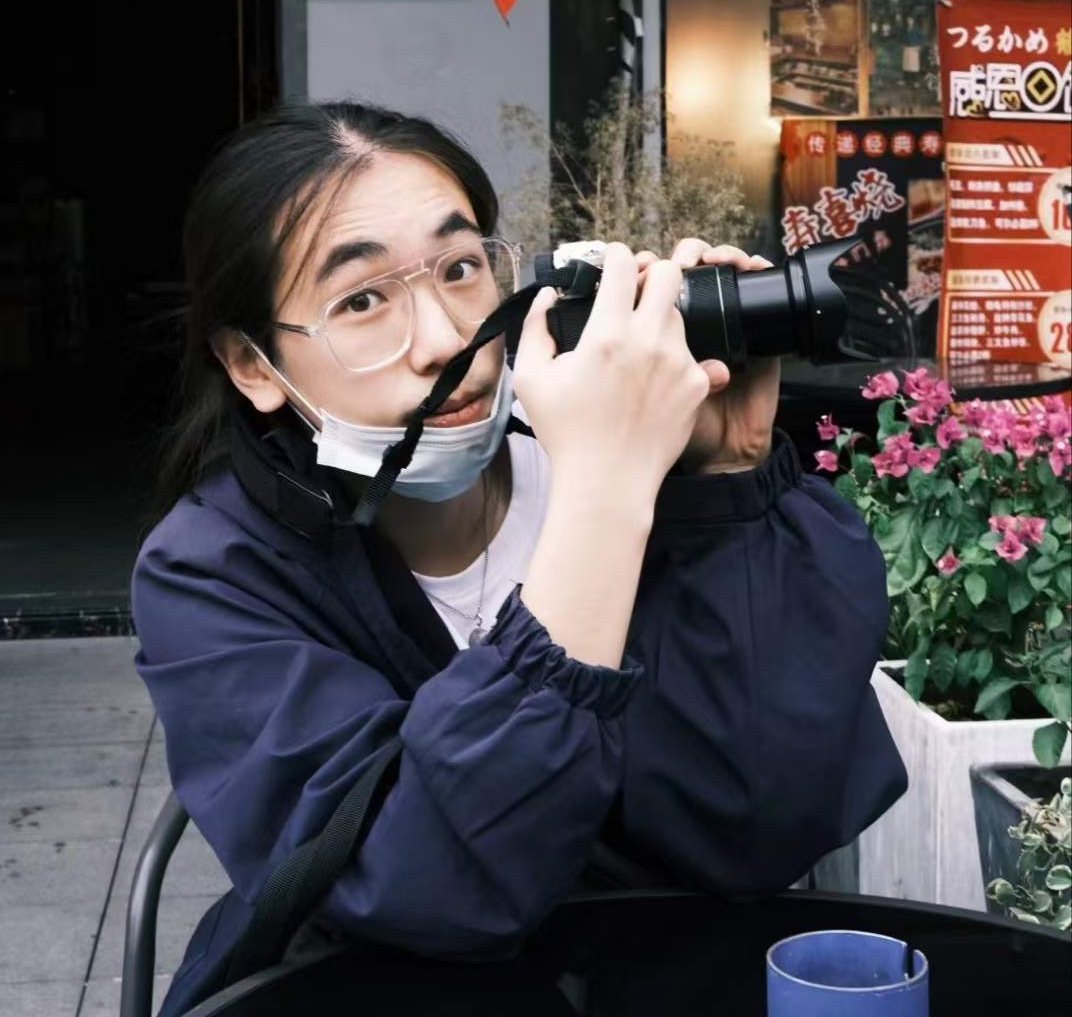
I study generative models, with a focus on long-horizon generation, representation learning, and reasoning. My earlier work explores privacy and copyright protection in generative models.
Google Scholar* Equal contribution
arXiv preprint
Pass@k reveals how distribution-matching distillation trades broad coverage of valid outputs for stronger single-sample quality in image and video generation.
arXiv preprint
A controlled Rubik's Cube benchmark reveals the compute cost of hidden-state reasoning and why lower generation loss does not guarantee better reasoning.
arXiv preprint
Cross-view class-token alignment improves ImageNet linear-probe accuracy by 9.4 percentage points while preserving comparable generation quality.
arXiv preprint
PACC learns compact memory from a frozen video generator, retaining earlier events and improving consistency in long video generation.
arXiv preprint
Dual-Stage Registers reduce harmful outlier tokens in both vision encoders and diffusion transformers, improving generation quality across ImageNet and text-to-image settings.
TMLR 2026 (Featured Certification)
Selective Jacobi decoding speeds up autoregressive normalizing-flow inference by up to 4.7 times while preserving generation quality, without additional training.
KDD 2026
We identify a corruption stage during few-shot diffusion fine-tuning and use Bayesian neural networks to improve fidelity, quality, and diversity without extra inference cost.
ICCV 2025
Adaptive layer-wise gradient alignment exposes weaknesses in federated-learning defenses by preserving backdoor effectiveness while making malicious updates harder to detect.
NeurIPS 2025
Exact unlearning can still leak removed examples when pre- and post-unlearning models are exposed; our guided attack doubles extraction success in some settings.
TPDP 2025
A lightweight learned membership inference attack reveals privacy leakage in diffusion-based tabular synthesis and won all four tracks of the MIDST Challenge.
ICML 2025
FineXtract uses the distribution shift between pretrained and personalized diffusion models to recover about 20% of fine-tuning data from real-world checkpoints.
ICLR 2025 (Spotlight)
Carefully selected targeted attacks provide stronger protection against unauthorized diffusion customization than untargeted adversarial watermarks.
CVPR 2024
CGI-DM visualizes conceptual differences between pretrained and fine-tuned diffusion models to provide evidence for copyright authentication.
ICLR 2024
Score distillation makes protective image perturbations faster and more memory-efficient while strengthening defenses against unauthorized diffusion-based mimicry.
ICML 2023 (Oral)
AdvDM uses adversarial examples as protective watermarks that prevent diffusion models from learning an artist's style from unauthorized images.
arXiv preprint
Mist improves the transferability and robustness of adversarial watermarks designed to protect artwork from unauthorized diffusion-model imitation.